Emergent.sh grew fast. The company reports crossing $100 million in annualized revenue within eight months of launch, raised $130 million at a $1.5 billion valuation in July 2026, and now counts more than 10 million users across 190+ countries. Those numbers alone make Emergent worth a serious look. But growth numbers and user experience are two different things, and this Emergent.sh review spends most of its time on the second one, including what real users on G2, Trustpilot, and Reddit actually say once the free credits run out.
What Is Emergent.sh and How Does It Work?
Emergent is an agentic AI software development platform. You describe an app in plain language, and its AI agents handle the design, coding, testing, integration, and deployment, aiming for production-ready software rather than a rough prototype. The platform supports both web and mobile applications, with mobile builds running on Expo and React Native, deployable to iOS and Android.

The company was founded in 2024 by twin brothers Mukund Jha, previously CTO at Dunzo and a Google alum, and Madhav Jha, a former member of the team that built Amazon SageMaker. That engineering pedigree shows up in Emergent's positioning: it pitches itself less as a website generator and more as an AI product-development team, with a heavier emphasis on testing and production readiness than some competitors.
Getting Started: Onboarding and Your First Prompt
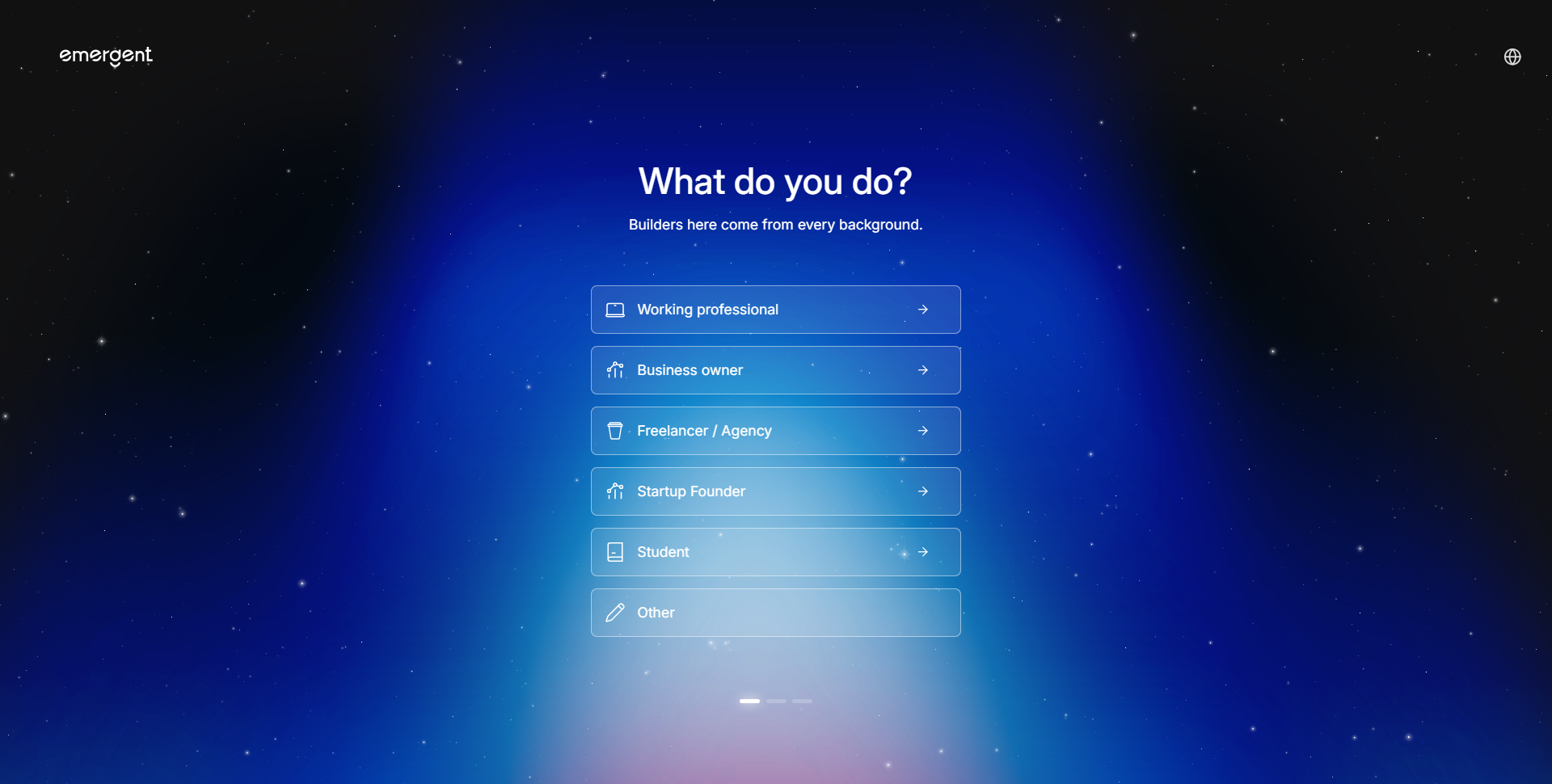
Signing up walks you through a short onboarding flow that asks what you do, working professional, business owner, freelancer or agency, startup founder, or student, before dropping you into the builder.
From there, the main workspace greets new users with a clear incentive: "You have received 10 free credits for your first prompt." You can choose between Web App and Mobile App tabs, and if you're not sure where to start, Emergent suggests example prompts like a shot-list app for a wedding photographer or a site walkthrough app for a contractor. It's a genuinely low-friction start, and the free credits are enough to see a real first build before you decide whether to pay for anything.
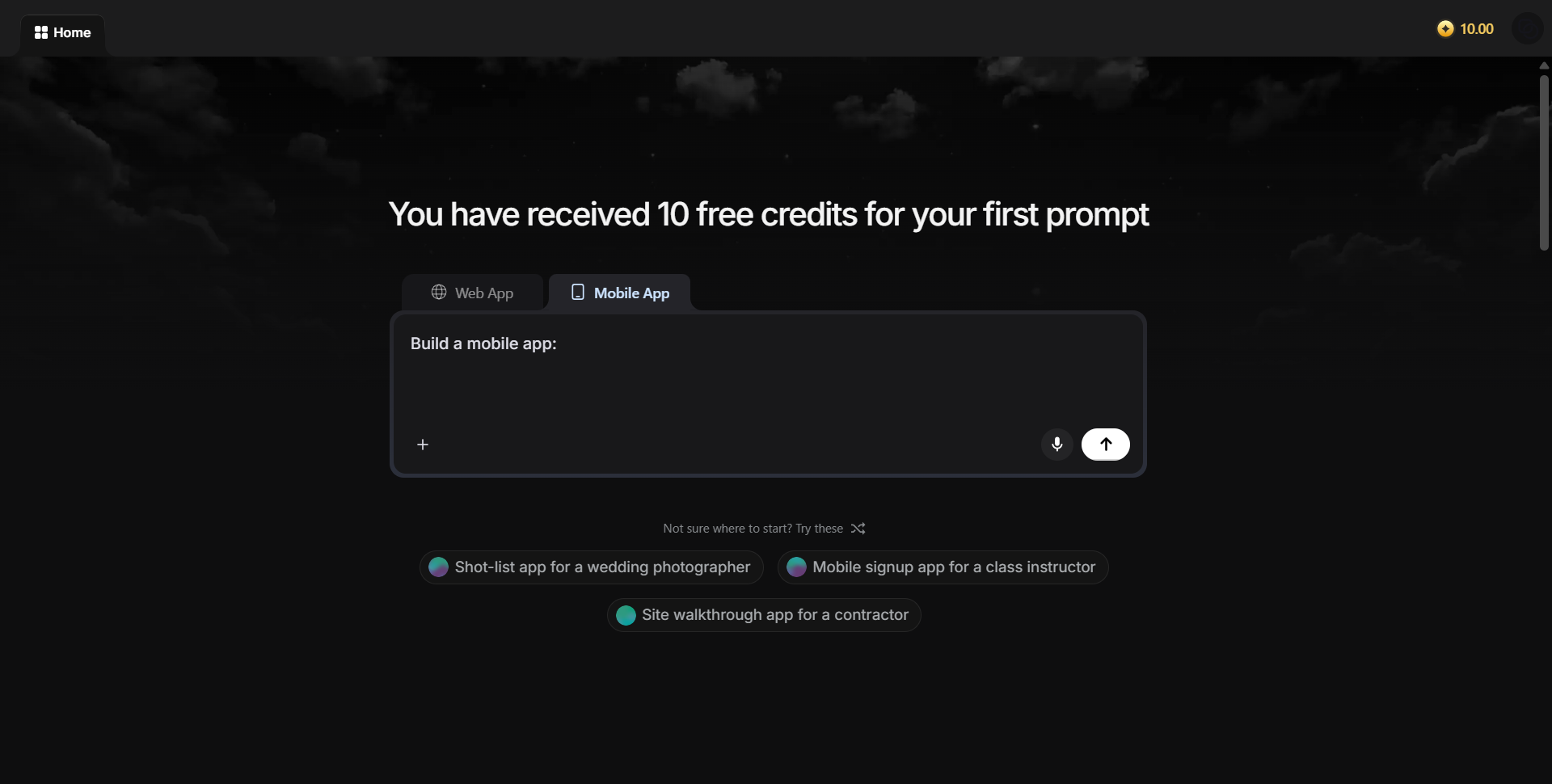
You can try the full flow yourself through the app dashboard once you've created an account.
Custom Agents and Advanced Features on Pro
One feature that separates Emergent from a simple prompt-to-app tool is Manage Agents, found under account settings. It lets Pro users build domain-specific custom agents, tailored to a particular workflow, with flexible prompts and configuration rather than relying only on Emergent's default general-purpose agent.
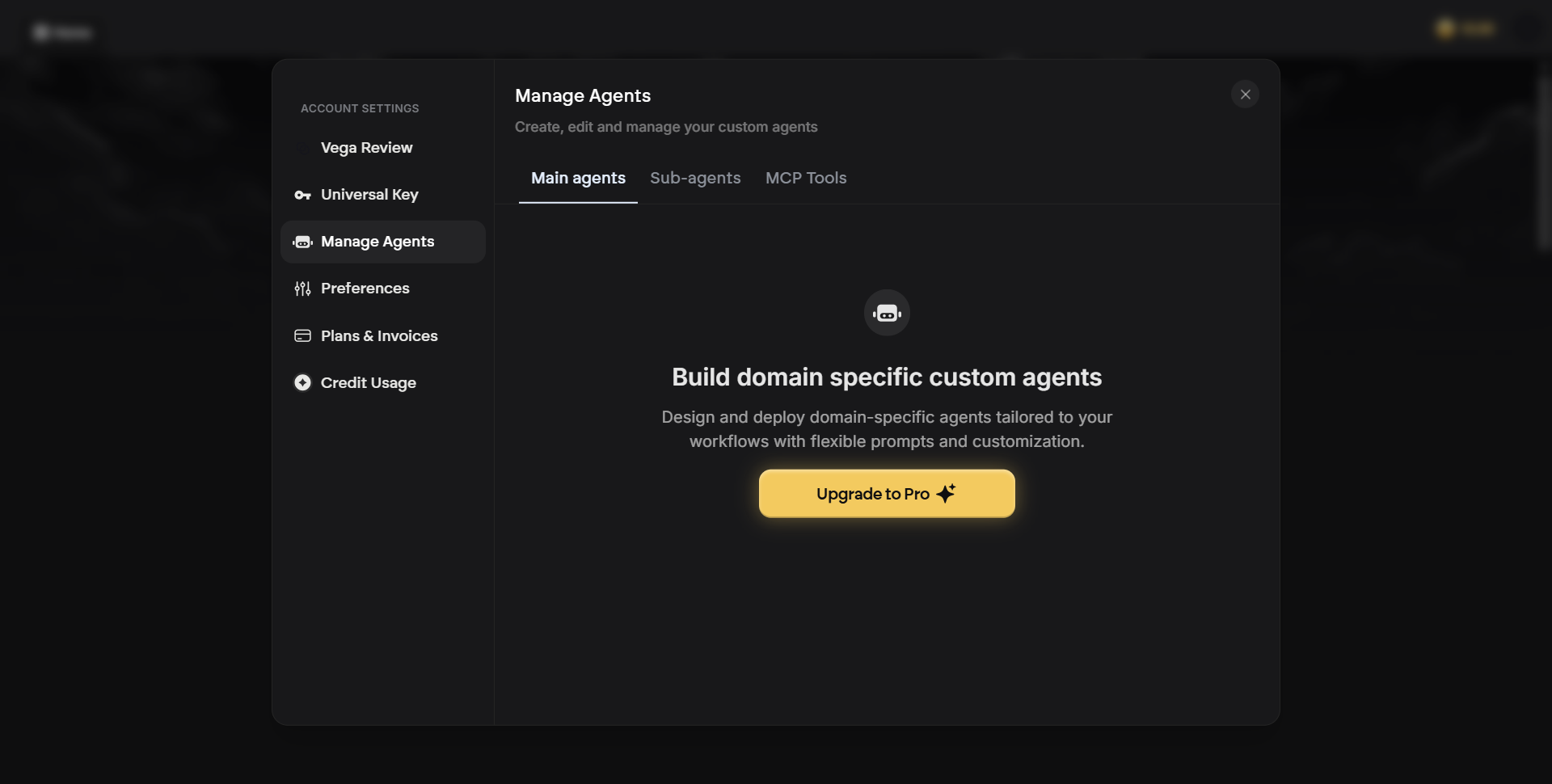
This is squarely aimed at agencies and teams that build the same type of application repeatedly and want to encode their own patterns and standards into the agent itself, rather than re-explaining context in every new prompt. It's a genuinely differentiated feature relative to Lovable and Bolt, and it lines up with Emergent's broader Wingman product, which extends the same agentic idea into autonomous work across more than 300 connected business tools.
Emergent.sh Pricing: Free, Standard, Pro, and Enterprise
Pricing is where this Emergent.sh review needs to slow down, because it's also the most common source of user complaints. Here's the current breakdown from the official pricing page.
| Plan | Price | Credits | Best For |
|---|---|---|---|
| Free | $0/month | 10 monthly credits | Testing the platform, one small build |
| Standard | $20/month (billed annually) | 100 monthly credits, private hosting | Individuals and small projects |
| Pro | $200/month (billed annually) | 750 monthly credits, custom agents, 1M context window | Power users and agencies |
| Business | Custom | Everything in Pro, plus SSO, RBAC, shared workspaces | Teams needing collaboration and governance |
| Enterprise | Custom | Everything in Business, plus audit logs, VPC deployment | Large orgs with compliance requirements |
Your account settings show your current plan clearly, and upgrading is a one-click action from either the account panel or the dedicated Plans & Invoices screen.
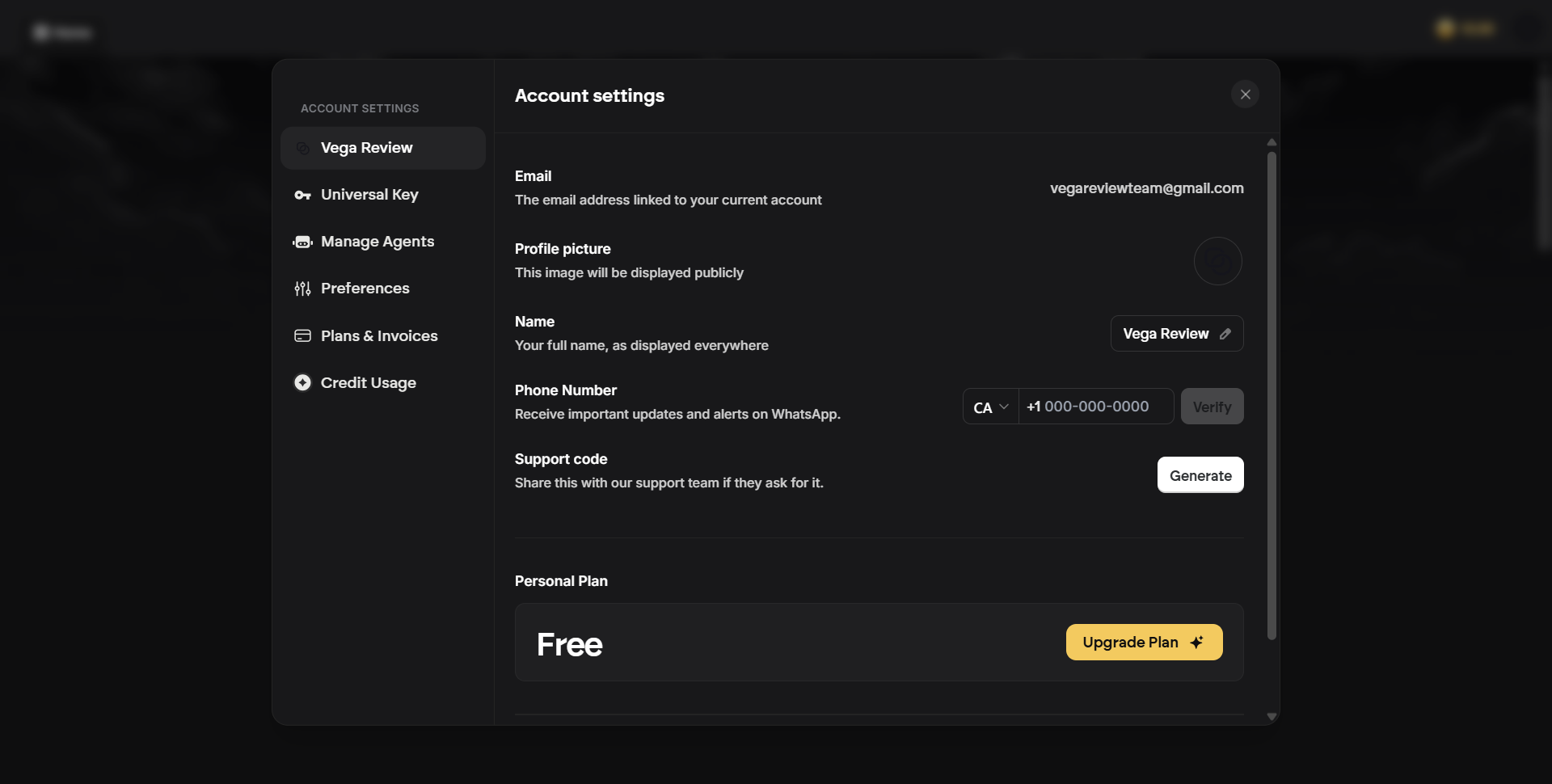
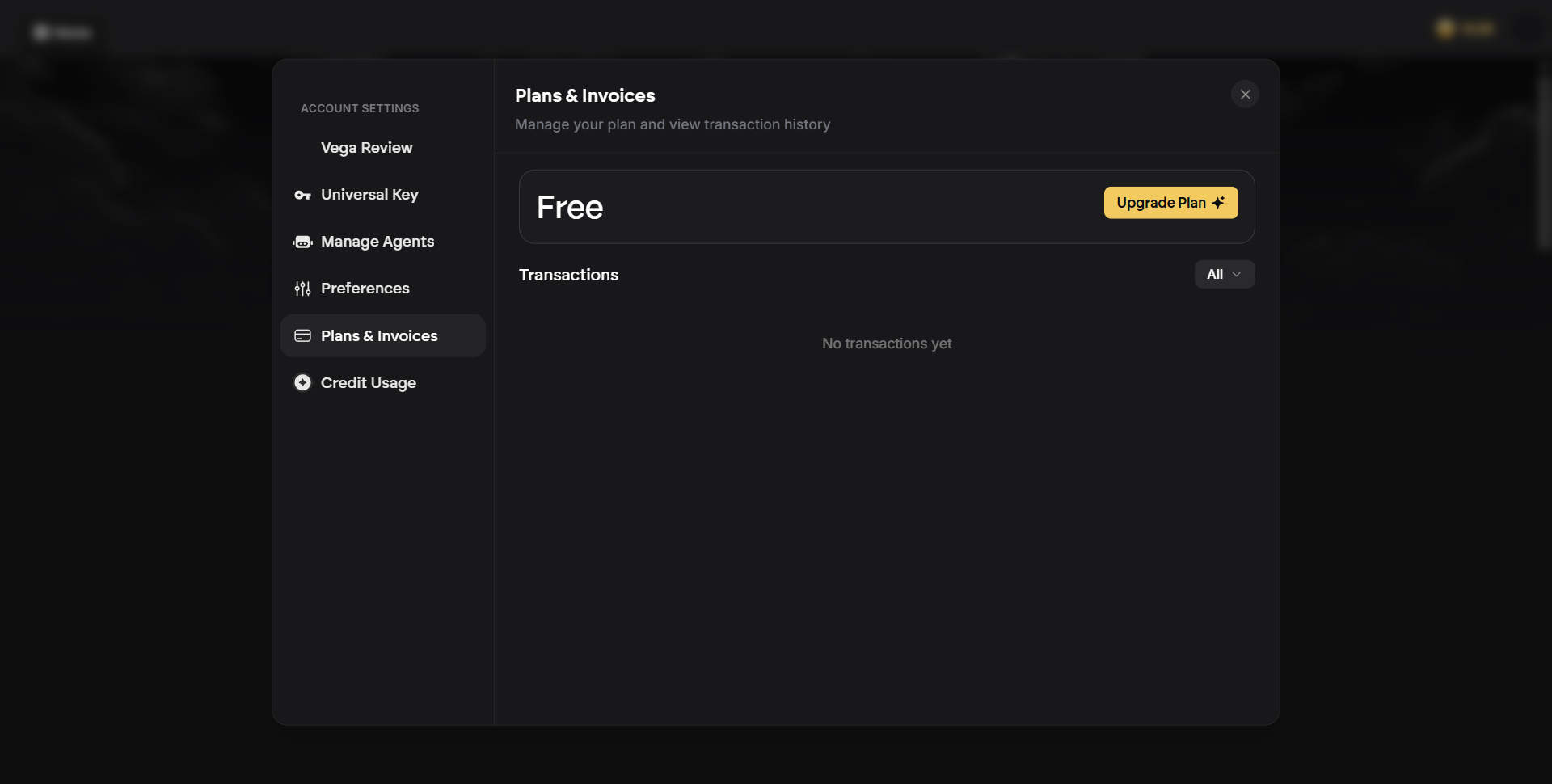
The jump from Standard's $20 to Pro's $200 with no middle tier is steep, and every deployment consumes roughly 50 credits regardless of plan, on top of whatever the build itself cost. That detail matters more than it looks on the pricing page, and it's the single most common complaint across independent reviews, covered next.
Building something like this? Get your own product reviewed, compared, and permanently indexed on VegaReview.
See pricing →What Real Emergent.sh Users Say: G2, Trustpilot, and Reddit
This is the section that separates a marketing page from an honest review, and for Emergent, the independent data tells a genuinely mixed story.
| Platform | Rating | Sample Size |
|---|---|---|
| G2 | ~4.3 / 5 | Small sample (limited reviews) |
| Trustpilot | ~2.7 / 5 | 500+ reviews |
| Reddit sentiment | Mixed, credit complaints dominate | Multiple threads |
The gap here is large, and it's worth being direct about why. G2's sample size for Emergent is still small relative to more established tools, and reviewers there skew toward people who had a successful build and are comparing it favorably to hiring developers. One Trustpilot reviewer, a Salesforce developer by trade, described spending around $500 on an initial build for a wellness app with a full client frontend and therapist backend, and said they didn't expect to need more than the $20 monthly plan going forward, calling the speed and quality of the build genuinely impressive.
Trustpilot's broader pattern is rougher, and it centers on two connected issues: credit consumption and agent reliability. Multiple reviewers describe the agent getting stuck in loops, claiming a bug was fixed when it wasn't, and consuming credits again on the next session to "fix" the same problem. One detailed one-star review described investing several thousand dollars into two apps, with much of that spend going toward repairing damage the agent itself had introduced, and said a refund request was initially declined on the grounds that used credits are non-refundable, regardless of why they were used. Several reviewers used the word "scam" in describing their experience, particularly around unexpected charges and credits disappearing faster than expected; that's a strong claim and reflects user sentiment rather than a verified legal finding, but it appears often enough across independent reviews to be worth flagging directly in this review rather than glossing over.
On Reddit, the recurring theme matches Trustpilot closely: credit costs that are hard to predict, deployment fees that apply on top of build costs, and frustration when the agent introduces a regression while trying to fix an unrelated bug. The more measured reviews describe this as a real trade-off rather than a dealbreaker, noting that clear, specific prompts burn far fewer credits than vague ones, and that monitoring the in-app credit dashboard closely is close to mandatory if you're on a budget.
Emergent.sh vs. Lovable vs. Bolt vs. Replit
No Emergent.sh review is complete without placing it against the tools people cross-shop before buying.
| Tool | Strength | Where It Falls Short vs. Emergent |
|---|---|---|
| Lovable | Cleaner UI, more accessible for non-coders | Less emphasis on production testing and mobile builds |
| Bolt.new | Faster in-browser execution | Narrower scope, no native mobile app generation |
| Replit | Broadest platform, strong infrastructure depth | Less focused on agentic, production-first workflows |
Emergent's real differentiator is its emphasis on production readiness and native mobile output, backed by testing and custom agents rather than a single general-purpose generator. That ambition is also why its pricing model carries more risk than a flat-fee competitor: an agent trying to do more work per task will burn more credits when it gets something wrong, and the review data above shows that happens often enough to matter.
Pros, Cons, and Who Should Actually Use Emergent.sh
An honest review means naming the real trade-offs, not softening them.
Where Emergent.sh genuinely delivers:
- Native mobile app generation (iOS and Android) alongside web, which fewer competitors offer natively
- Custom, domain-specific agents on Pro for teams building repeatable app patterns
- Low-friction onboarding with 10 free credits and a genuinely fast first build
- Real production traction: $100M ARR in eight months and enterprise customers
Where it falls short:
- Trustpilot's ~2.7/5 average across 500+ reviews signals a real, recurring reliability problem for a meaningful share of users
- Credit consumption for debugging the agent's own mistakes is the most consistent complaint across platforms
- No middle pricing tier between Standard's $20 and Pro's $200
- Refund policy on used credits has drawn specific, detailed criticism when the credits were consumed fixing agent errors
If you're a non-technical founder with a clear, well-scoped brief and a willingness to monitor credit usage closely, Emergent can genuinely deliver a working prototype fast, and the positive reviews back that up. If you're budget-sensitive or building something complex enough to require multiple rounds of debugging, go in with a firm credit budget and read the Standard plan's fine print before committing to anything larger.
Final Verdict
Emergent.sh's ambition, native mobile support, custom agents, and a genuine focus on production readiness, is real and sets it apart from simpler prompt-to-website tools. But the credit-based pricing model that supports that ambition is also its clearest and most consistently reported weakness. Test it on the free 10-credit tier with a small, well-defined project first, watch the credit meter closely, and only scale up once you've seen how your specific use case behaves.
Start Building With a Free Emergent.sh Account
Test the platform on a small, well-scoped project first. Your first 10 credits are free, and that's usually enough to see exactly how the agent handles your idea.