Getting words onto a page is easier than ever. Getting a useful article, convincing email, or accurate product description still takes a clear brief and someone willing to edit.
The best AI writing tools in 2026 help with different parts of that work. Some act as flexible writing partners. Others organize brand information, automate marketing tasks, or combine drafting with SEO research and content optimization.
Our quick answer: start with Claude for drafting and revision, ChatGPT for everyday writing, Jasper for brand-led marketing, and Frase or Surfer for SEO-focused production.
This VegaReview guide compares official capabilities, current pricing, and practical tradeoffs. Our recommendations focus on the job you're trying to finish; the list isn't a benchmark of which model writes the most impressive paragraph.
Best AI writing tools at a glance
| Tool | Best for | Pricing snapshot | Main consideration |
|---|---|---|---|
| Claude | Drafting and editorial revision | Free; Pro $20/month | Usage limits and factual verification |
| ChatGPT | Flexible everyday writing | Free; Plus $20/month | Needs clear instructions and source material |
| Jasper | Brand-led marketing production | Pro $69/seat/month | Higher cost than a general assistant |
| Copy.ai | Repeatable sales and marketing workflows | Chat $29/month | Workflow plans are a separate commitment |
| Writesonic | Content plus AI search tracking | Starter $79/month, annual billing | Broader platform than a simple writer |
| Frase | Research, briefs, and content optimization | Starter $49/month | Research needs an original angle |
| SEOwind | Structured SEO article production | Platform $189/month, annual billing | Separate platform and service packages |
| Surfer SEO | Optimizing new and existing content | Standard $99/month, annual billing | Scores aren't performance guarantees |
Prices are US-dollar examples checked in October 2026. Annual billing means an upfront yearly commitment; taxes, allowances, and optional features can change the total.
1. Claude by Anthropic
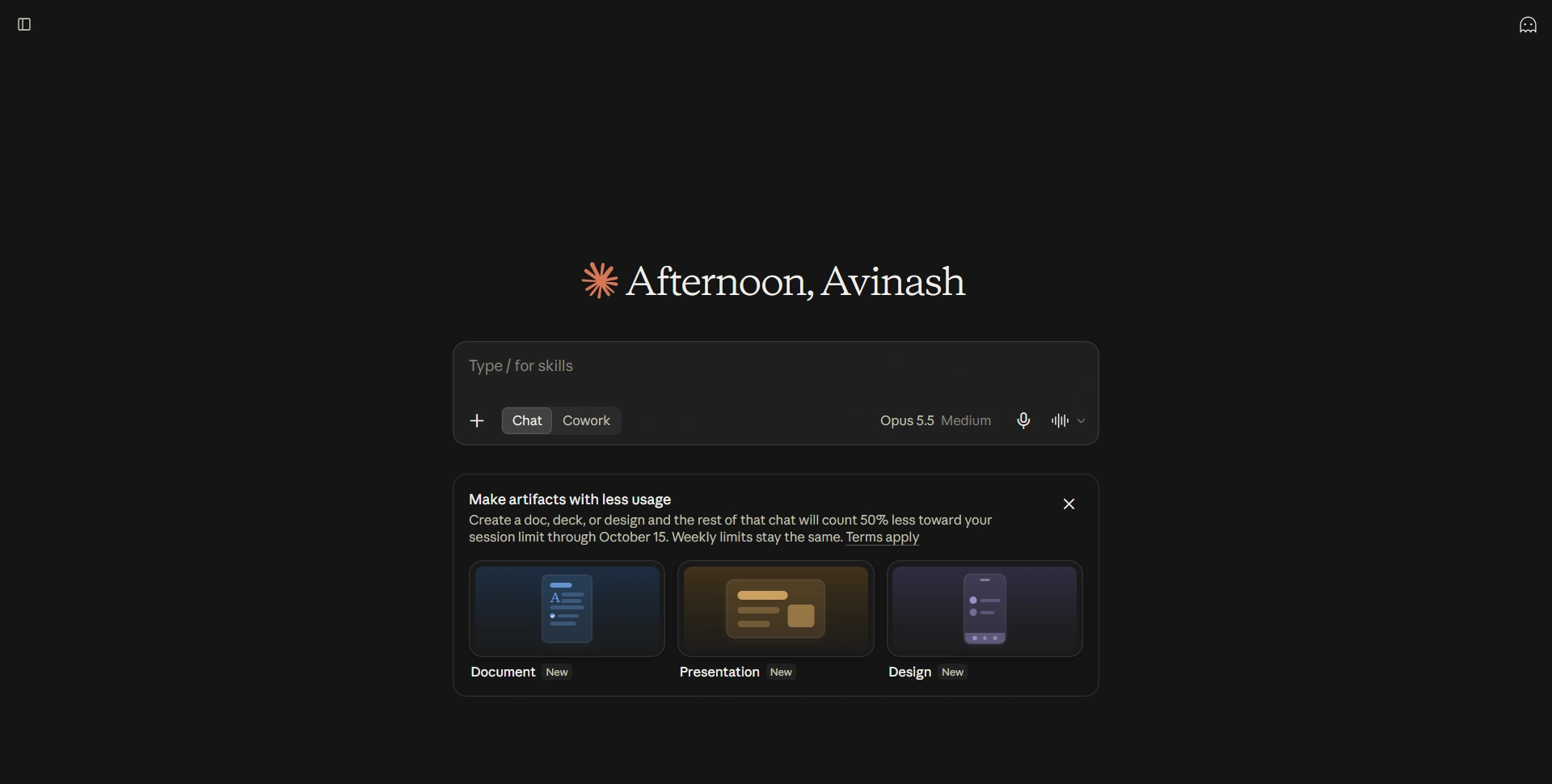
Best for: Writers developing a detailed draft and improving it through revision.
Claude is our shortlist pick when you want to work through an argument, restructure an article, or refine a draft against a clear style guide. You can give it source material and explain the audience before asking for a rewrite.
We'd use it for blog drafts, business documents, and editing that requires context. The useful test is whether a revision keeps your meaning while making the text easier to read.
Features: Conversational drafting, file analysis, web search, and Projects for organizing work.
Pros:
- Flexible instructions suit detailed editorial feedback.
- Projects help organize recurring writing assignments.
Cons:
- Usage limits can interrupt extended writing sessions.
- Confident wording doesn't establish that a claim is accurate.
Pricing: A Free plan is available. Pro costs $20/month, or $200 billed annually. Max starts at $100/month for heavier usage. Choose around your actual revision workload rather than assuming every writer needs the largest plan.
2. ChatGPT by OpenAI
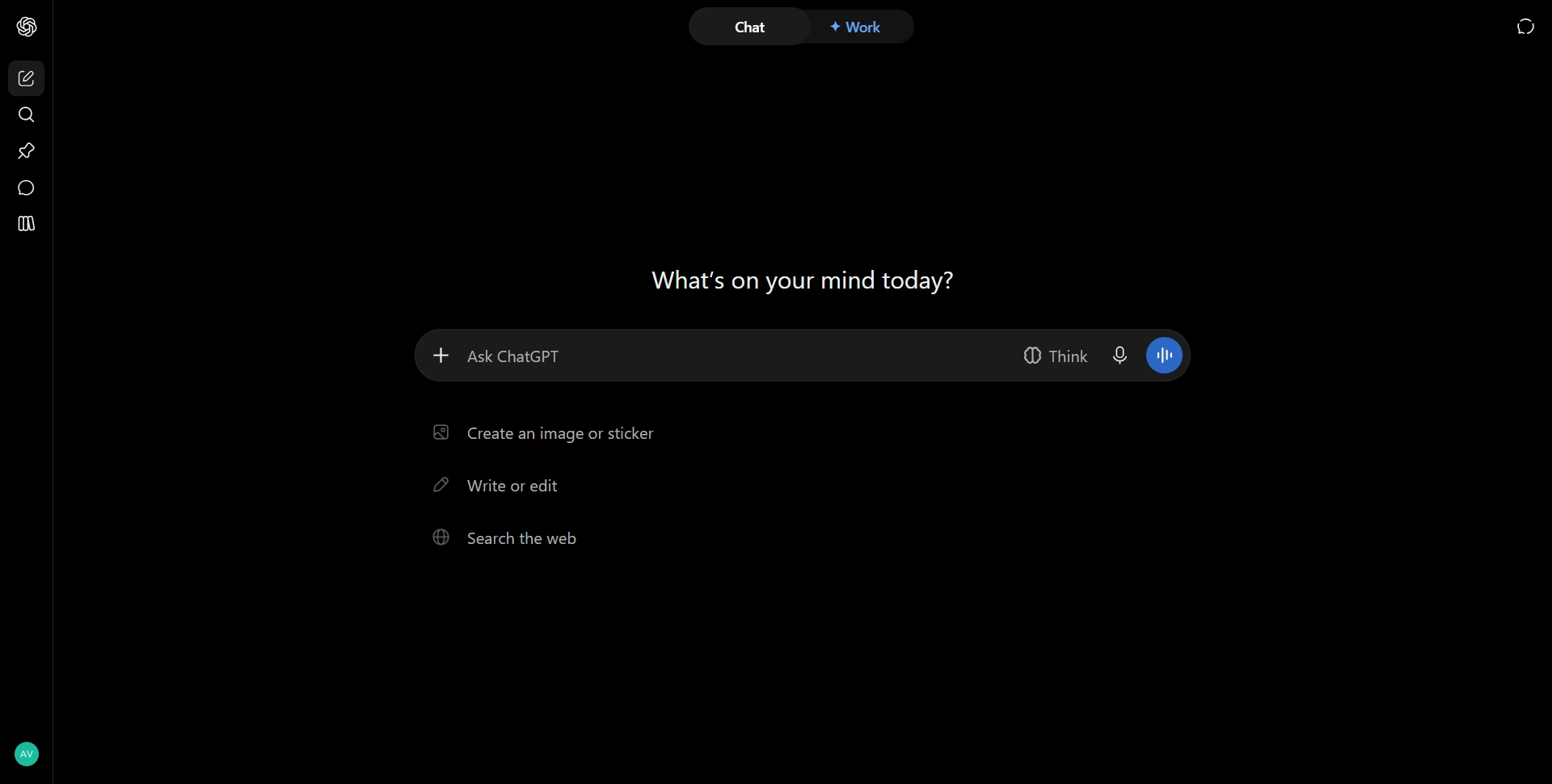
Best for: Everyday writing, brainstorming, research, and repurposing content.
ChatGPT suits people who want one flexible assistant rather than a separate application for every writing task. You can develop an outline, compare headline options, rewrite an email, or adapt an article for a different audience.
We'd start here if your workload changes throughout the week. Give it examples of your voice and explain what the reader should understand or do afterward.
Features: Conversational drafting, file uploads, web search, and follow-up editing.
Pros:
- Covers multiple formats without a rigid template workflow.
- Lets you refine the brief and draft in one conversation.
Cons:
- Vague prompts can produce generic, repetitive copy.
- Facts, quotations, and references still need checking.
Pricing: Free access has limits. ChatGPT Plus is $20/month, with higher access and additional capabilities.
For accompanying visuals, our AI image generators guide compares ChatGPT's image tools with dedicated creative platforms.
3. Jasper
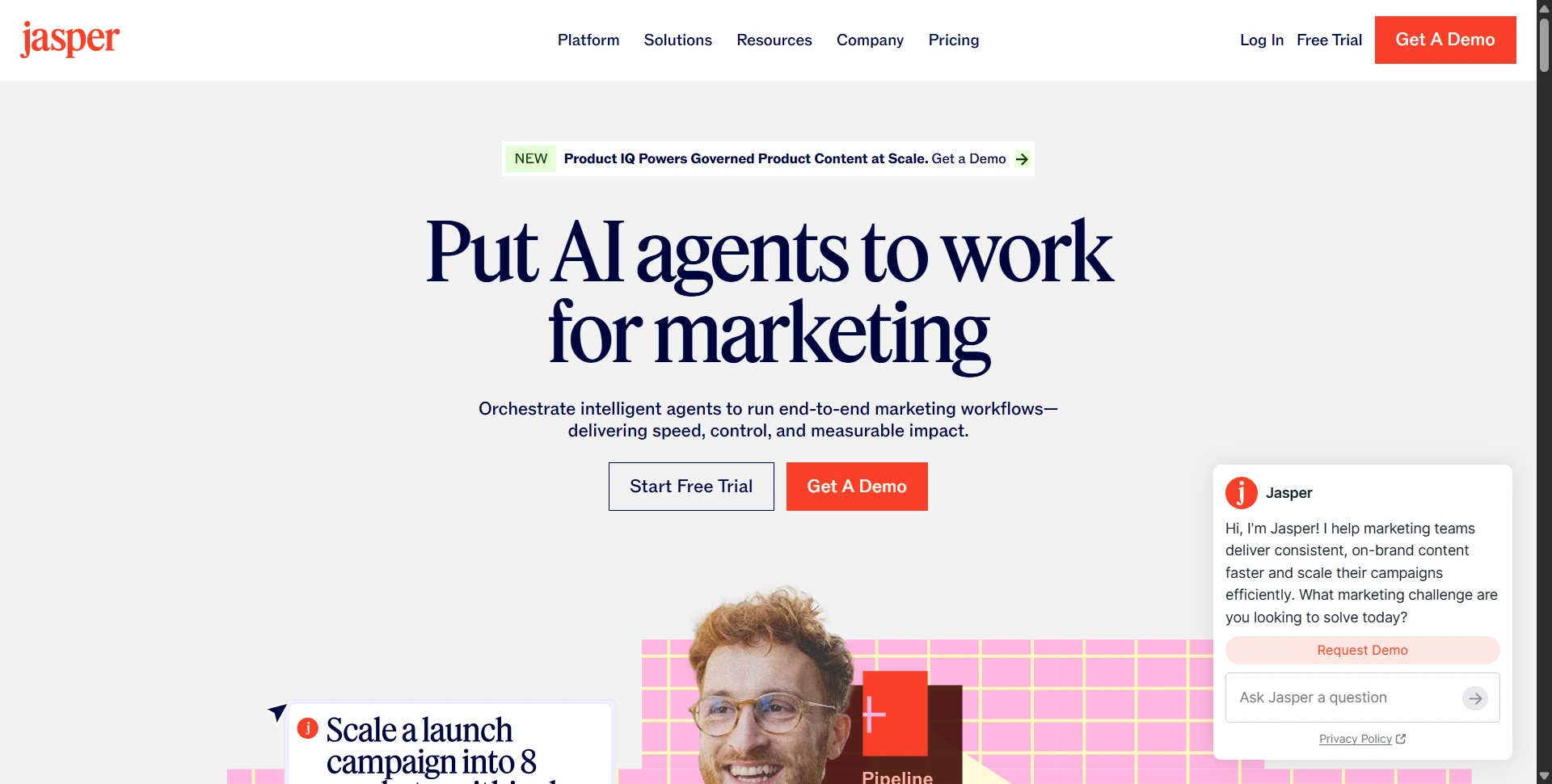
Best for: Marketing teams producing content around shared brand rules.
Jasper is worth considering when the problem is consistency across campaigns. Brand Voice, knowledge assets, and audience information give teams a way to reuse the same context instead of explaining the company in every prompt.
We'd shortlist it for campaign copy, email marketing, social content, and product messaging that needs a recognizable voice across multiple formats.
Features: Brand customization, Canvas, knowledge assets, audience settings, and marketing agents.
Pros:
- Shared brand context supports more consistent content production.
- Purpose-built marketing workflows can reduce repeated setup.
Cons:
- More expensive than a general writing assistant.
- Advanced customization and team requirements may need Business pricing.
Pricing: Jasper Pro is $69/month per seat, or $59/month billed annually. A seven-day trial is advertised; Business has custom pricing. We'd test the same campaign across several formats before deciding whether the brand controls justify the subscription.
4. Copy.ai
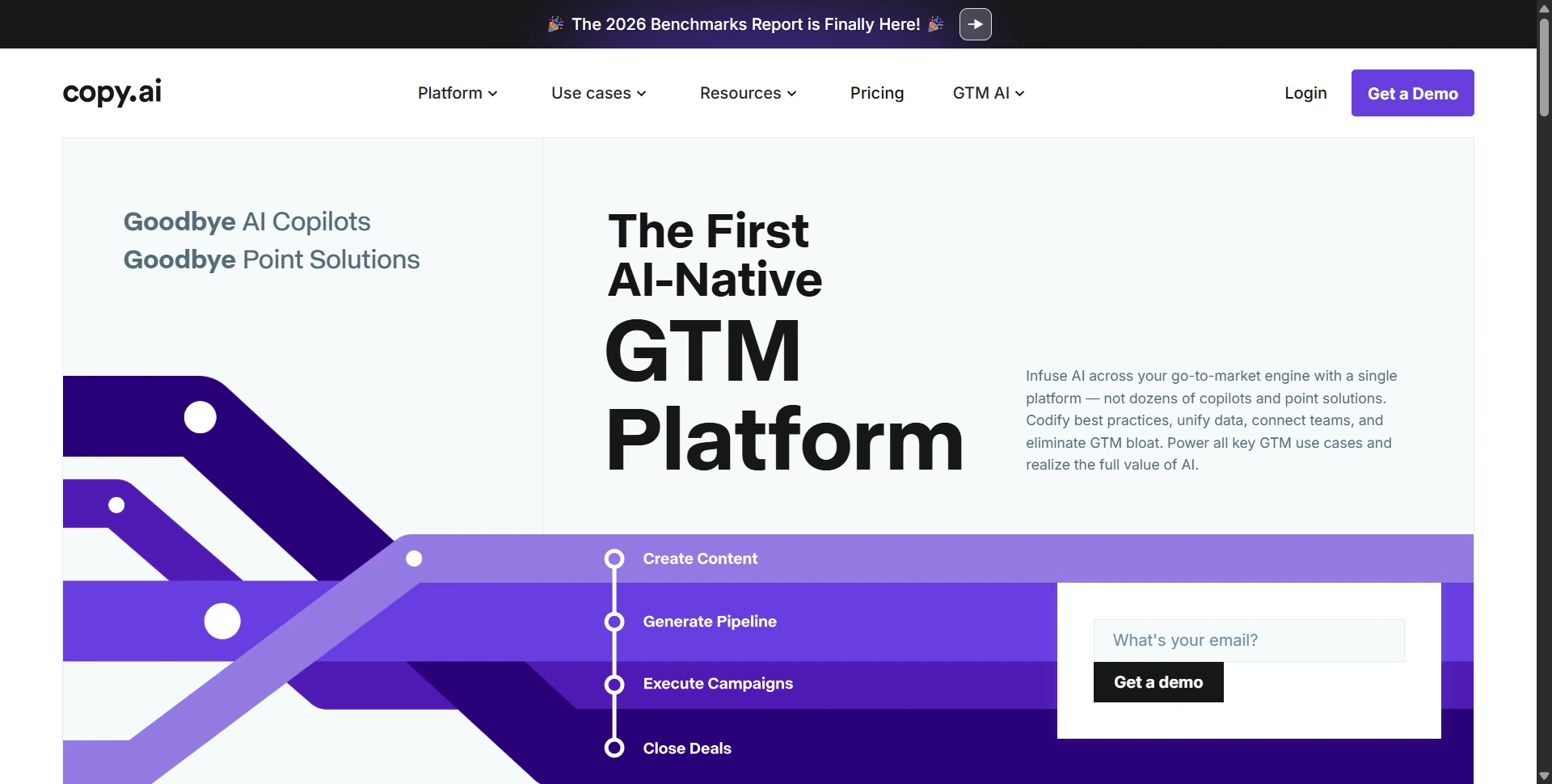
Best for: Teams turning repeatable sales and marketing tasks into workflows.
Copy.ai has moved beyond being a collection of copywriting templates. Its current positioning centers on go-to-market automation: using company information and repeatable steps to support sales, marketing, and operations.
That makes it interesting for content repurposing, sales collateral, and workflows that involve more than generating a paragraph. We'd compare it when repeated manual coordination is costing your team time.
Features: Chat, Workflows, Brand Voice, Infobase, Tables, and integrations.
Pros:
- Company knowledge can inform repeated content tasks.
- Automation connects writing with a broader business process.
Cons:
- Workflow setup takes more planning than a quick chat prompt.
- Unlimited chat words don't mean unlimited workflow executions.
Pricing: The Chat plan is $29/month or $24/month billed annually. Growth lists $1,000/month billed annually with workflow credits. Check which plan supports your intended automation before treating the entry subscription as the complete solution.
5. Writesonic
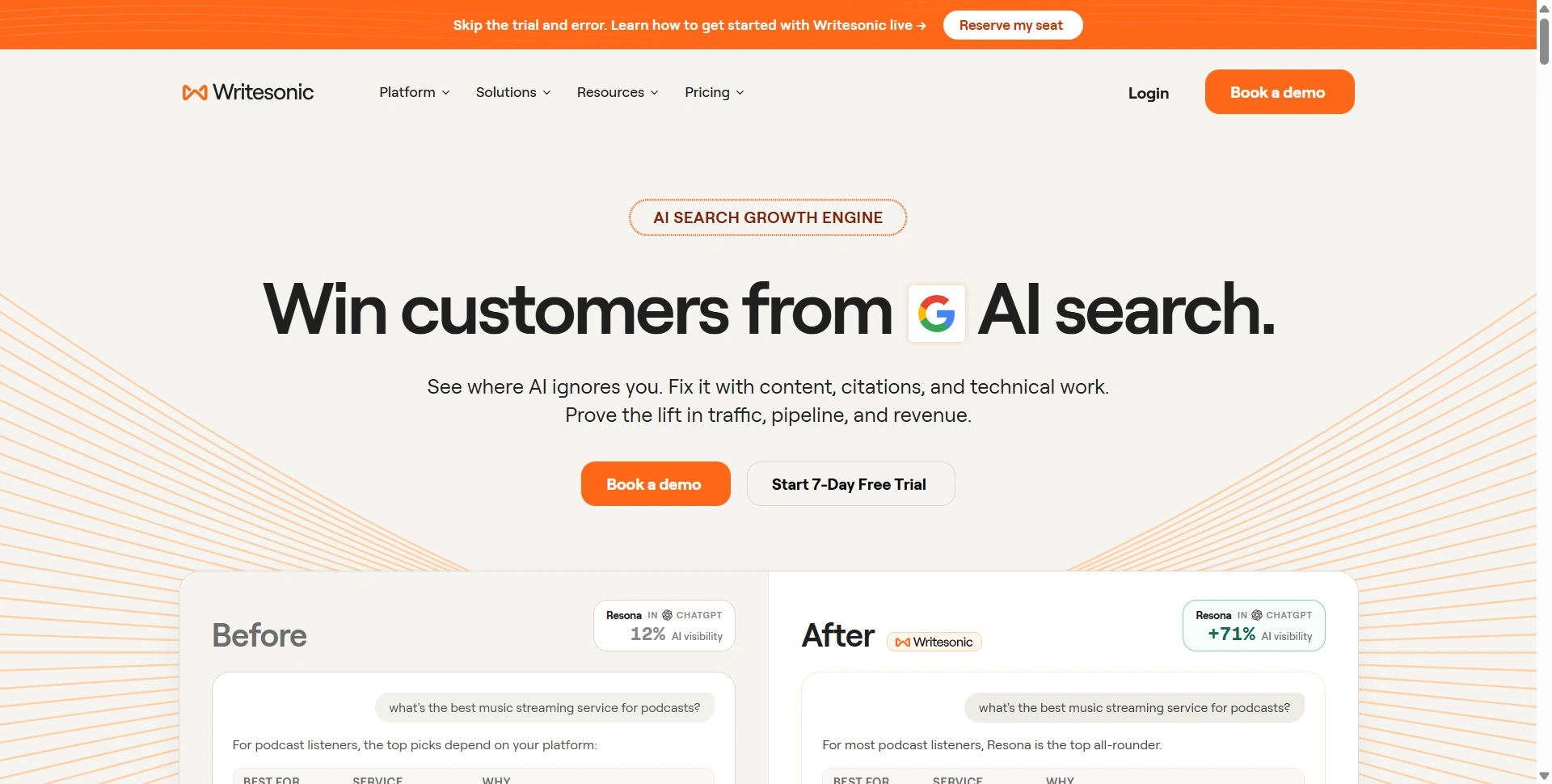
Best for: Content teams combining article creation with AI search monitoring.
Writesonic now positions itself around AI search visibility as well as writing. Its platform combines article generation, site audits, and tracking of how selected AI platforms mention or recommend your brand.
We'd consider it when you want content creation and visibility monitoring in one workspace. For occasional emails or short drafts, that wider scope may be unnecessary.
Features: AI articles, site audits, prompt tracking, and plan-dependent agentic workflows.
Pros:
- Connects content production with a view of AI search visibility.
- Bundled audits can help identify work beyond new articles.
Cons:
- Article and tracking allowances need careful budgeting.
- The broader subscription can be excessive for a casual writer.
Pricing: Starter is $79/month billed annually, including 15 AI articles per month. Basic is $199 and Growth $399 per month on annual billing. Compare the tracked platforms, article allowance, and workflow access for each plan rather than relying on older writing-only price comparisons.
6. Frase
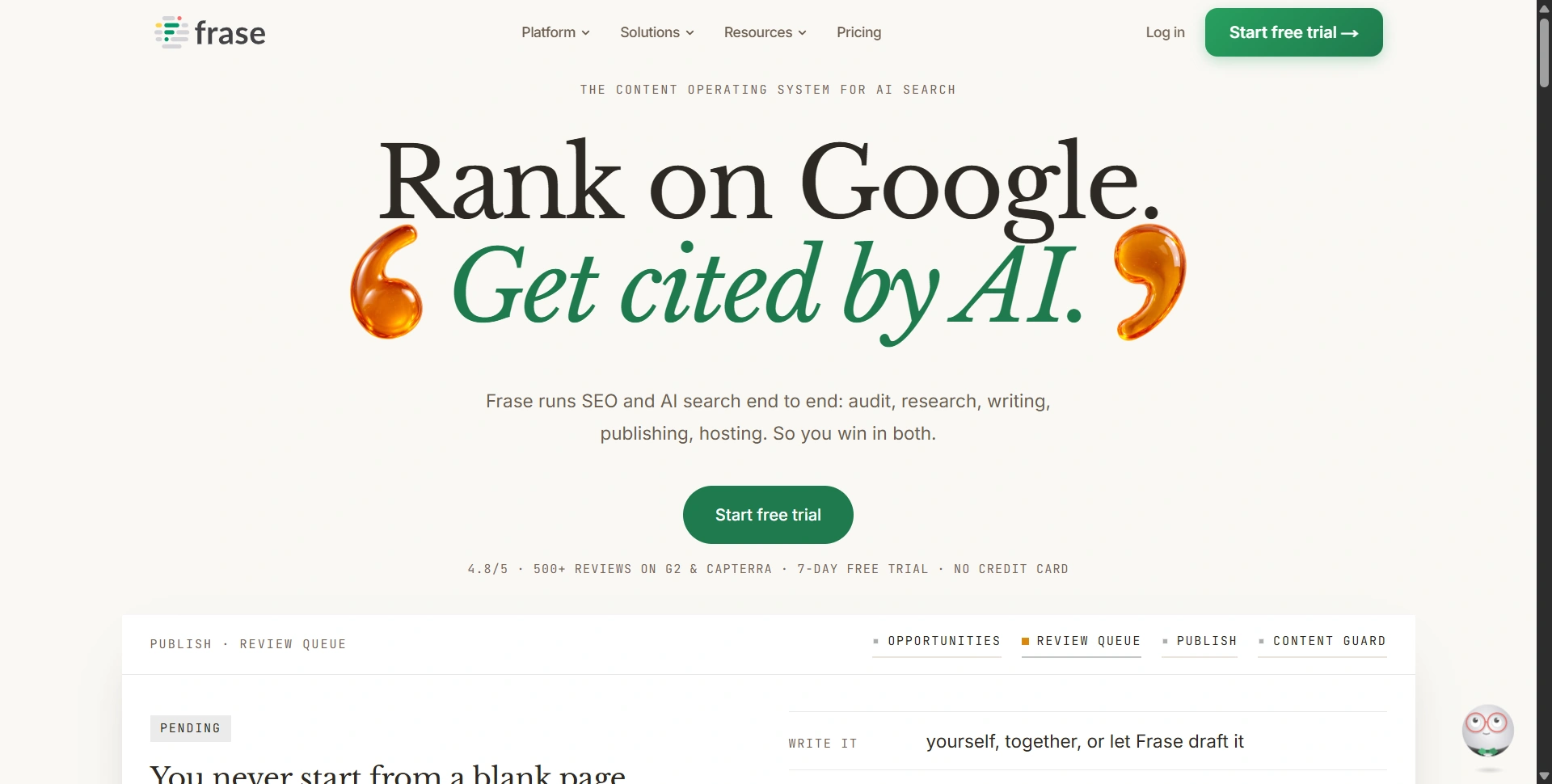
Best for: Building content from research and improving topic coverage.
Frase is a practical option when your bottleneck is figuring out what an article should cover. Its research and optimization workflow helps you move from a topic toward a brief, draft, and publishable page.
We'd shortlist it for informational articles and updates to existing content. Use competitor research to understand the question, then add your own examples and expertise.
Features: SEO research, AI Agent, Brand Voice, content optimization, GEO scoring, and publishing integrations.
Pros:
- Research and drafting sit inside a connected workflow.
- Optimization supports improving existing pages as well as creating new ones.
Cons:
- Following competitors too closely can make your content interchangeable.
- Content scores don't establish originality or accuracy.
Pricing: Starter costs $49/month, or $39/month billed annually. It includes one seat, one site, and 10 articles each month. A seven-day trial is advertised without a credit card. Check your publishing volume before choosing the tier.
7. SEOwind
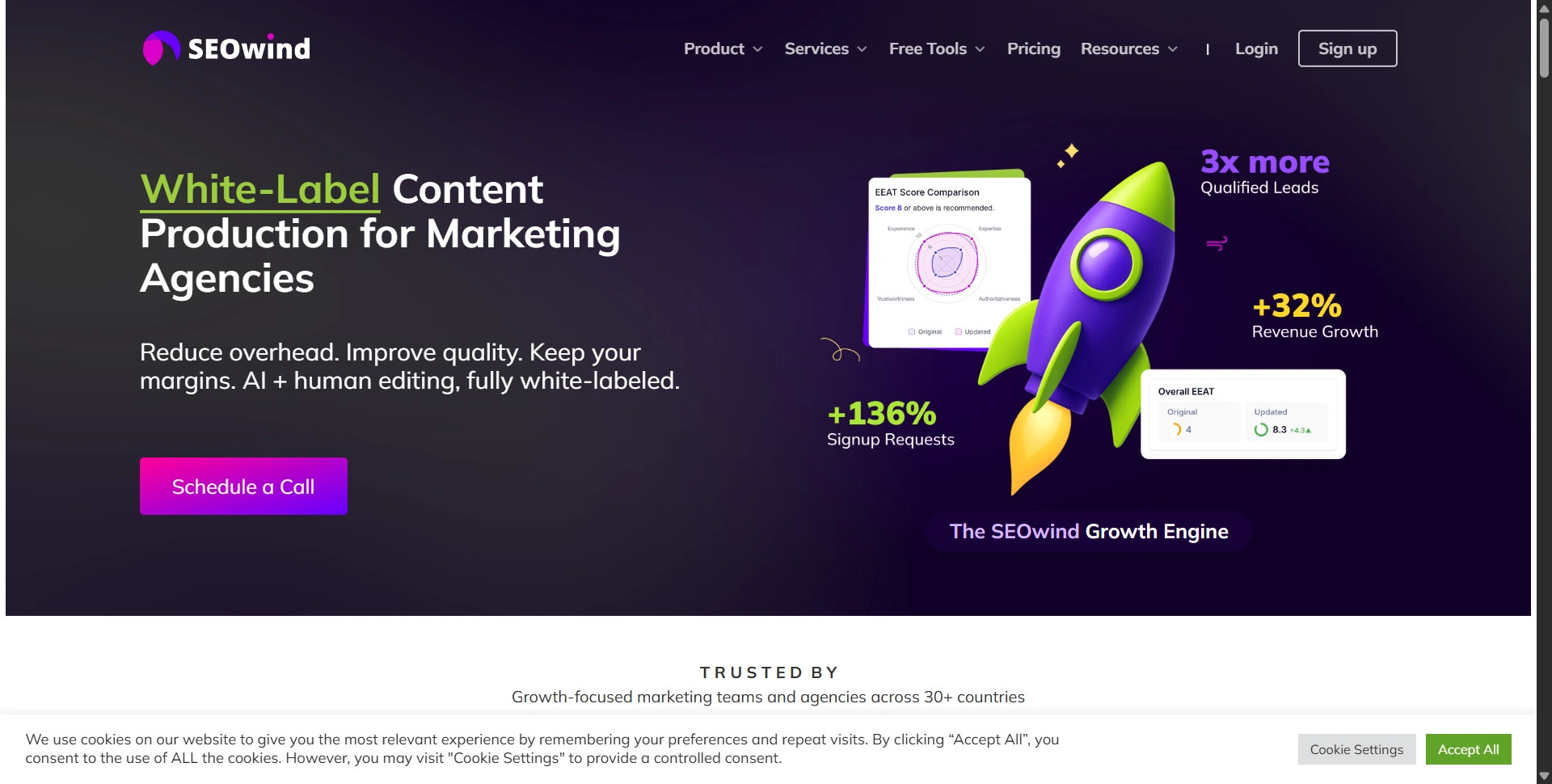
Best for: Teams producing SEO articles through a structured research-to-draft process.
SEOwind combines an AI writing platform with separate content and SEO services. That gives buyers two distinct routes: run production internally or pay for additional execution and editorial support.
We'd consider its platform when you need research-based outlines, reusable brand context, and a repeatable process for producing articles across your site.
Features: AI article writing, SERP-based outlines, keyword clustering, internal linking, and custom brand voice.
Pros:
- Structured briefs help organize production before drafting.
- Separate service options support teams needing additional capacity.
Cons:
- Platform access doesn't include every done-for-you service.
- The annual commitment needs enough recurring work to justify it.
Pricing: Platform access is $189/month billed annually, with up to 20 AI articles and two projects/domains. SEO services start at $3,000/month; white-label content has custom pricing. Compare tools with tools and service retainers with service retainers when evaluating the cost.
8. Surfer SEO
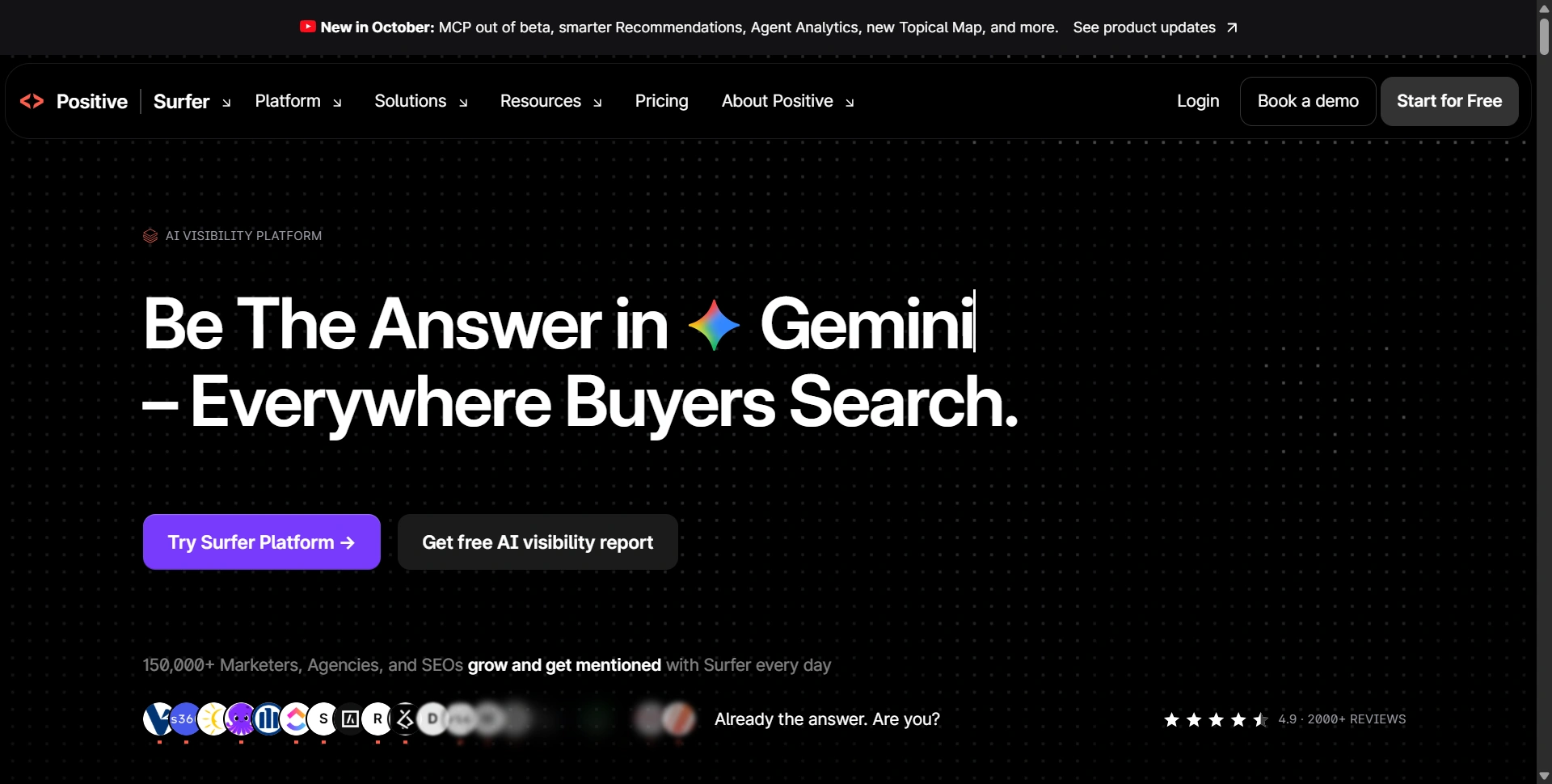
Best for: Writers optimizing drafts and maintaining an existing content library.
Surfer SEO makes sense when you already know what you want to publish and need help improving its coverage and structure. Its content editor and optimization tools give writers feedback while they work.
We'd shortlist it for regular SEO production, content refreshes, and teams that need a shared optimization process. Keep editorial judgment in control of the final wording.
Features: Content Editor, AI writing, content optimization, Brand Knowledge, and AI visibility tracking.
Pros:
- Feedback helps identify gaps in new and existing drafts.
- A shared workflow supports writers and editors working together.
Cons:
- Chasing a score can make a useful draft less natural.
- Document allowances and included features vary by plan.
Pricing: Standard lists $99/month billed annually, with Pro at $182/month on annual billing. Lower and higher tiers also exist. Confirm the AI-writing allowance and monthly billing option for your selected plan before subscribing.
Choose a tool around your writing process
Give two shortlisted tools the same brief, sources, and sample of your voice. Compare the finished article after editing, including research time, corrections, and subscription usage.
For SEO and AEO, answer the main question clearly, use descriptive headings, verify sources, and add examples readers can't get from a generic summary. Google's guidance on AI-assisted content emphasizes accuracy, quality, and relevance. A tool's optimization score isn't a substitute.
If subject expertise or final editing is the bottleneck, our Fiverr alternatives guide compares places to hire human support.
Finish one real piece before upgrading
Pick an article, email, or campaign you actually need. Use a free plan or suitable trial, supply a clear brief, and edit the result until it's ready to publish. Pay for the tool that consistently saves time while keeping your facts, voice, and reader's needs intact.